
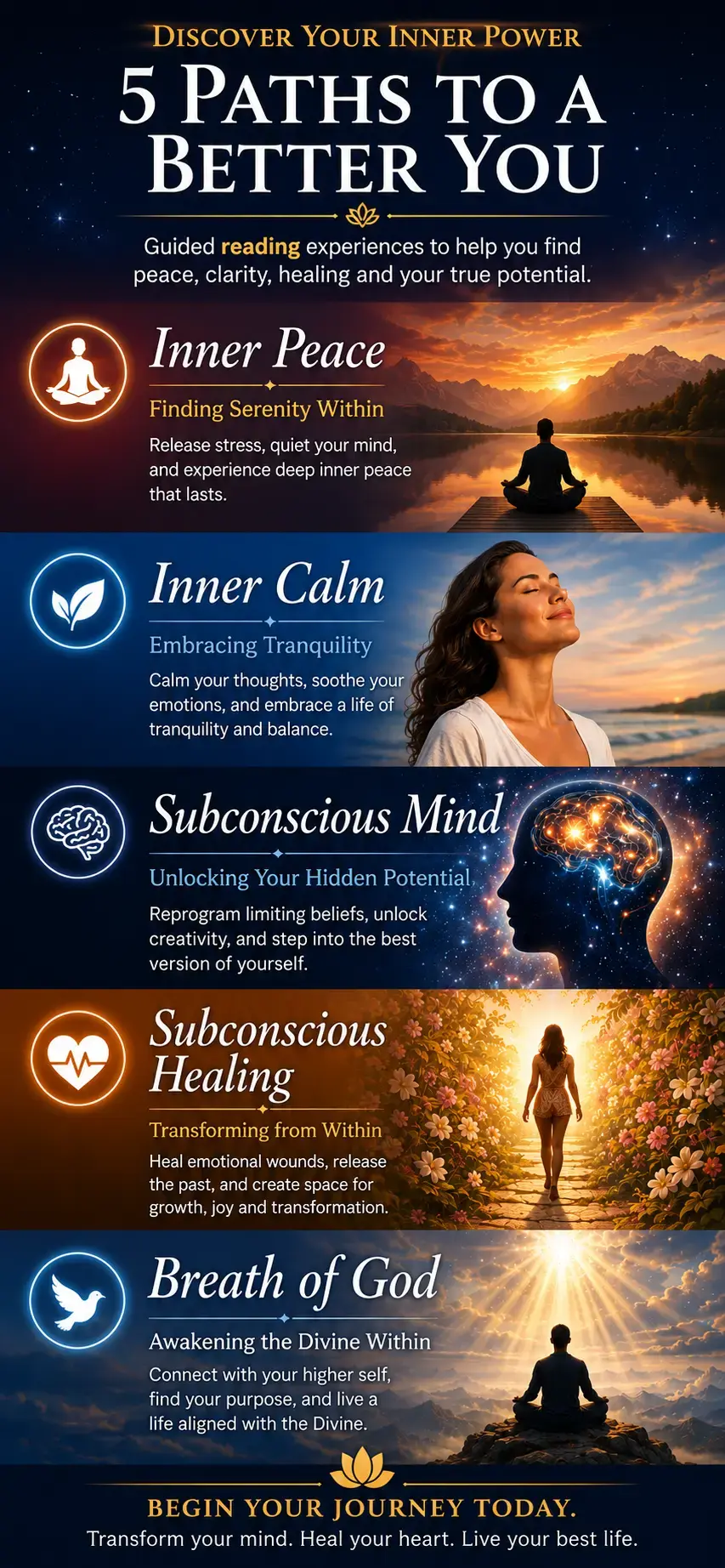
Every audiobook.
Every eBook.
The complete library.
And the full 60-minute Breath of God Pro-Care Soundtrack.
Everything.
All for just $12 a week.
Less than you might spend on lunch—yet what you discover here could stay with you for a lifetime.
Come inside. Explore. Listen. Discover what might be waiting for you.
A Different Way to Understand the Mind
These are not written to give you more to do.
They are here to offer a different way of seeing…
one that may help you feel more settled, more clear, and more at ease in your thinking.
What You’ll Find Here
You’ll find reflections on:
– Inner calm and quieting mental noise
– The nature of thought and awareness
– The subconscious mind and how it shapes experience
– Clarity, direction, and natural insight
A Simple Way to Read
You don’t need to read everything.
You can begin with whatever feels relevant.
Some ideas may resonate immediately.
Others may become clearer over time.
When You’re Ready
If something here speaks to you…
you may find it helpful to explore one of the guided audio experiences. They are designed to be used in a simple, natural way.
Explore the articles below.
Understanding yourself more deeply can change the direction of your entire life.
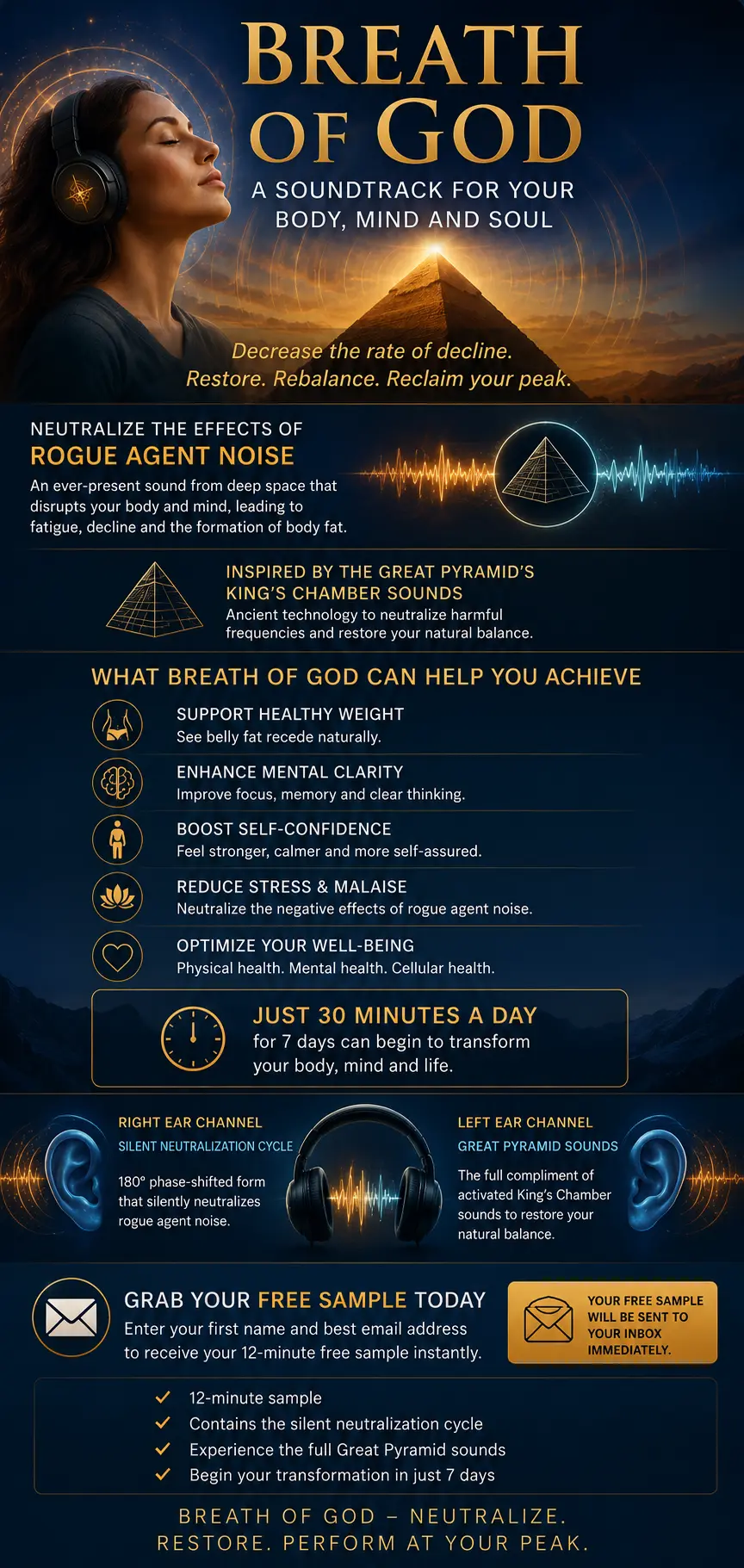
Many people arrive here searching for inner peace or inner calm—often after trying everything they were told should work.
Meditation.
Mindset.
Affirmations.
Breathing techniques.
Spiritual practice.
Some of these help—for a while.
But for many, the result is the same:
Calm fades.
Peace becomes unstable.
The mind understands—but the body still reacts.
This isn’t because something is missing in you.
It’s because most approaches work at the level of effort—
not at the level where calm and peace are actually sustained.
Why Inner Calm and Inner Peace Don’t Stay
Inner calm and inner peace are not created through discipline.
They are allowed when the nervous system and subconscious no longer feel the need to stay alert.
If you’ve noticed that:
It is that your system is still organised around protection.
Until that changes, calm and peace will continue to come and go.
The Missing Piece: The Subconscious Responds to Experience
Most approaches rely on thinking, analysing, or reframing.
But the subconscious does not respond to explanation.
It responds to:
This is why insight alone does not create change.
It is also why “letting go” cannot be commanded.
Many people reach a point where they recognise:
“I understand everything—but I still feel the same.”
Lasting change begins when the system experiences something different— not when it is told something new.
What Breath of God Is Designed to Do
Breath of God was created for people who have already done the work— and are ready for something deeper and simpler.
It is for those who:
This approach does not try to control the mind.
It works with the system beneath it.
Over time, people begin to notice:
This is not about creating a state.
It is about allowing the system to stop bracing.
Why Breath, Rhythm, and Sound Are Central
The subconscious listens to what is experienced repeatedly. Not what is explained.
Breath, rhythm, and sound:
When experienced consistently and gently, the system begins to update. Nothing dramatic is required.
The baseline begins to shift on its own.
This Is Not a Technique
Breath of God is not something to perform or perfect.
There is:
Instead, it is a reorientation.
A way of allowing the system to settle in the way it naturally responds to.
The changes are often noticed indirectly:
This is how real change unfolds when it is not being forced.
Who This Is For
This approach tends to resonate with people who: • Are perceptive and self-aware
It is not designed for:
It is designed for lasting internal settling.
A Different Starting Point
Instead of asking:
“How do I make myself calm or peaceful?”
A different question opens a different path:
“What inside me no longer needs to stay tense?”
When that question is answered at the subconscious level, calm and peace stop being something you try to maintain.
They become your background state.
Begin with Direct Experience
Understanding this approach is helpful.
Experiencing it is what creates change.
The Breath of God audio library is designed to allow this shift to happen naturally—
through listening, not effort.
You don’t need to control your thoughts.
You don’t need to force anything to change.
You simply allow the system to begin responding differently.
Most people believe their thoughts shape how they feel.
But thoughts are only part of the picture.
They suggest.
They interpret.
They try to guide.
What actually determines your emotional state—moment to moment—is the subconscious mind.
If inner calm and inner peace have felt temporary—appearing briefly, then fading—
the reason is not a lack of effort.
It is that the deeper system beneath thought is still operating in a different way.
What the Subconscious Mind Actually Does
The subconscious mind is not abstract or mysterious.
It is practical, efficient, and focused on protection.
It regulates:
It does not operate through logic.
It works through:
This is why understanding something clearly does not always change how you feel.
Conscious Intention vs. Subconscious Response
Your conscious mind:
Your subconscious:
You can consciously want calm.
But if the subconscious associates calm with risk or vulnerability, tension will return.
Not because something went wrong—
but because the subconscious always prioritises what it believes is safest.
Why the Subconscious Holds Onto Old Patterns
The role of the subconscious is simple:
Maintain what has worked before.
It does this by:
Even when those patterns create discomfort.
This is why:
The system is not trying to frustrate you.
It is trying to protect you using what it already knows.
Emotional Memory Shapes Your Inner State
The subconscious stores experiences as emotional memory. Not as clear narratives—but as felt associations. It remembers:
If calm or openness once preceded:
Then those states may have been marked as unsafe. This is not dysfunction.
It is conditioning.
Why Affirmations and Positive Thinking Rarely Stick
Affirmations speak to the conscious mind.
But the subconscious responds only when:
This is why people often notice:
Belief is conscious.
Feeling is subconscious.
Lasting change happens when the feeling shifts.
Inner Calm and Inner Peace Depend on the Subconscious
Inner calm is possible when the system allows the body to settle. Inner peace is possible when the system no longer anticipates inner conflict. If the subconscious still expects:
Then calm and peace will feel temporary.
Not because they are fragile—
but because they are not yet familiar.
How the Subconscious Actually Changes
The subconscious does not change through effort alone.
It updates through:
At a deeper level, the system begins to recognise:
“Nothing goes wrong when I soften.”
That recognition cannot be thought into place.
It must be experienced.
Why Breath, Rhythm, and Sound Are So Effective
Breath, rhythm, and sound communicate directly with the subconscious. They:
This is not belief-based.
It is how the system naturally learns.
This is why audio-based approaches can create change without requiring effort or control.
What Real Change Feels Like
When the subconscious begins to shift, the changes are often subtle. People notice:
There is no dramatic moment.
No forced breakthrough.
Just a gradual shift in what feels natural.
A More Useful Question
Instead of asking:
“How do I change my subconscious mind?”
A more effective question is:
“What does my system need to experience in order to feel safe enough to soften?”
When that question is answered through experience,
calm and peace begin to stabilise on their own.
Bringing This Into Experience
Understanding the subconscious is helpful.
But change happens through experience.
This is why the audio within the Breath of God library is designed the way it is —
to allow your system to respond without needing to think, analyse, or force anything.
You don’t need to control the process.
You only need to allow the experience.
Final Reflection
If you’ve tried to change how you feel—but keep returning to tension, urgency, or inner noise—
it is not because you are broken.
It is not because you lack discipline.
It is not because you haven’t understood enough.
It is because the subconscious has not yet been given a reason to change.
When it is,
everything else begins to follow naturally.
Inner peace is one of the most searched-for experiences in modern life — yet for many people, it remains just out of reach.
It’s often treated as something to achieve: through discipline, positive thinking, emotional control, or spiritual effort.
But if inner peace were created through effort, the most dedicated people would already feel it.
Instead, many thoughtful, self-aware individuals quietly recognise something deeper:
“I understand so much… so why don’t I feel at peace?”
This page answers that question directly — without adding more pressure, methods, or expectations.
Inner peace is often misunderstood as a surface-level state.
It is not:
Instead, inner peace is a stable internal condition where:
It isn’t something you hold together.
It’s something that remains when inner tension stops being maintained.
Most attempts at inner peace fail for one simple reason:
They operate at the level of the thinking mind.
The conscious mind can:
But it does not control your deeper responses.
Inner peace is governed by the subconscious system, which regulates:
This creates a familiar disconnect:
This isn’t failure.
It’s simply working at the wrong level.
There’s a quiet but important distinction.
Temporary calm happens when circumstances align:
But inner peace is different.
It changes your baseline.
Instead of returning to tension, your system begins to return to calm.
This is the difference between:
Effort works well for behaviour change.
But inner peace is not behavioural.
When the system is holding:
Trying harder can quietly reinforce the idea that something is wrong.
This is why:
It’s not resistance.
It’s protection.
Inner peace is deeply connected to how safe your system feels.
If your nervous system is used to:
Then stillness can feel unfamiliar — even uncomfortable.
Before peace becomes natural, the body has to recognise it as safe.
This is why lasting calm often emerges through experiences that:
Peace is not imposed.
It is remembered.
Although inner peace feels deeply individual, the pattern behind it is shared.
Peace becomes unstable when there is:
When these begin to soften, something unexpected happens:
You don’t create peace.
You stop interrupting it.
Inner peace doesn’t mean you never feel stress or emotion again.
It means:
Over time, calm stops being something you visit —
and becomes something you live from.
Instead of asking:
“How do I become peaceful?”
A more useful question is:
“What no longer needs to stay tense inside me?”
That question doesn’t require effort.
It invites resolution.
For many people, understanding this intellectually is not the same as experiencing it.
This is where audio-based work becomes powerful.
Listening allows the mind to soften while the deeper system responds — without needing to analyse, control, or “get it right.”
If you want to explore this directly, you can begin with the Breath of God audio library, where this approach is experienced rather than explained.
If peace has felt close — but unstable —
it isn’t because you’re doing something wrong.
It’s because peace doesn’t come from effort.
It emerges when the part of you that has been holding tension
no longer needs to.
And when that happens,
peace is no longer something you try to keep.
It’s something that quietly remains.
Inner calm is something most people touch—but rarely sustain.
It appears briefly:
And then it fades.
The mind becomes active again.
The body tightens.
The pressure returns.
So the natural response is to try harder:
Yet despite the effort, inner calm still feels temporary.
This page explains why calm doesn’t last for most people—
and how it becomes natural without needing to be maintained.
Inner calm is often mistaken for something passive or mental.
It is not:
Inner calm is a physiological state where:
It is felt in the body first.
That is why it can disappear quickly when pressure returns.
These two are closely related—but not identical.
Inner calm relates to how activated your system feels.
Inner peace relates to whether there is inner resistance.
This means you can experience:
Inner calm often comes first.
It creates the conditions where deeper peace can stabilise.
Calm doesn’t disappear randomly.
It returns to whatever your system is most familiar with.
If calm depends on:
Then stress will override it.
This isn’t failure.
It’s your system returning to its learned baseline.
Inner calm is not created by thought—it is regulated by the nervous system.
If your system has learned to:
Then calm will feel temporary—even when it feels good.
This is why people often notice:
The body is not resisting calm.
It is returning to what it recognises as familiar.
Most approaches to calm work from the top down.
They attempt to:
But lasting calm develops differently.
It emerges when the body no longer feels the need to stay activated.
When the deeper system begins to settle:
Calm becomes something that remains—rather than something you recreate.
Your system already knows how to be calm.
What feels difficult is not calm itself—
but releasing the tension that replaced it.
Inner calm begins to return when:
This process cannot be rushed.
It unfolds as the system begins to trust stillness again.
For some people, calm does not feel immediately safe.
If calm was historically followed by:
Then the body may associate calm with vulnerability.
This can make calm feel:
In these cases, tension can feel more secure than stillness.
Until this changes, calm will continue to feel temporary.
Yes—but not through control or repetition.
Inner calm becomes stable when:
As this happens:
It becomes your baseline.
Instead of asking:
“How do I stay calm?”
A more useful question is:
“What inside me still feels the need to stay alert?”
That question shifts the focus away from effort
and toward resolution.
Understanding calm is different from experiencing it.
This is where audio-based work becomes powerful.
Listening allows the mind to step back,
while the nervous system responds without effort or control.
If you want to explore this directly, the Breath of God audio library offers a way to experience calm as it naturally returns—without needing to manage it.
If inner calm has always felt close—but unreliable—
it isn’t because you’re doing something wrong.
It’s because calm does not come from doing more.
It comes from no longer needing to brace.
When that shift begins,
calm stops being something you practice—
and becomes something you live within.
Subconscious healing is often misunderstood as something intense, effortful, or emotionally demanding.
People assume it involves:
But real subconscious healing rarely feels like that.
In many cases, it doesn’t feel like “healing” at all.
It feels like something that has been held for a long time
finally beginning to loosen on its own.
Subconscious healing is not about becoming someone new.
It is about allowing the deeper system to update what it no longer needs to hold.
This includes:
Healing occurs when the subconscious recognises that it no longer needs to stay tense, alert, or guarded.
When that shift happens, change doesn’t need to be forced.
It begins to unfold naturally.
A common problem with healing methods is that they focus on understanding, rather than state.
They ask:
But the subconscious does not respond to explanation alone.
It responds to experience.
If the nervous system still feels unsafe, no amount of insight will fully integrate.
This is why people often find themselves thinking:
The deeper system was never given a reason to stop protecting.
This distinction is essential.
Coping helps you function while tension remains.
Healing removes the need for that tension altogether.
Coping often looks like:
Healing feels different:
If something needs constant effort to maintain, it has not yet resolved at the subconscious level.
The subconscious is continuously predicting what is about to happen.
It is shaped by questions like:
Healing begins when the system experiences something new:
That it is safe to soften.
This cannot be forced through thought.
It must be felt — repeatedly and gently — until the system begins to trust it.
As that trust builds, inner responses begin to shift without effort, creating the foundation for a more stable inner state.
There is a common expectation that healing will feel dramatic or obvious.
In reality, subconscious healing is usually quiet.
It shows up as:
Often, people only recognise the change afterwards —
when something that used to affect them no longer does.
That is what integration looks like.
Subconscious change depends on whether the body feels safe.
If the nervous system is:
Then protective patterns will remain in place.
Healing begins when the system experiences:
The body learns first.
The mind follows.
Many people attempt to force release.
But from the perspective of the subconscious:
The more something is pushed to change, the more the system may hold onto it.
Lasting change happens when release is allowed, not demanded.
As healing begins to occur, the changes are often simple but meaningful:
Nothing artificial is added.
Something unnecessary is simply no longer maintained.
When the subconscious updates, it does not need to be reminded.
The change becomes part of your natural baseline.
Instead of asking:
“What do I need to fix or heal?”
A more effective question is:
“What inside me no longer needs to stay on guard?”
That question shifts the focus away from effort
and toward resolution.
Understanding this concept is one thing.
Experiencing it is different.
This is where audio-based work becomes especially effective.
Listening allows the thinking mind to soften,
while the deeper system responds without pressure or analysis.
If you want to explore this directly, the Breath of God audio library is designed to support this kind of shift — not through effort, but through experience.
If you’ve tried to heal and still feel pulled back into old patterns,
it is not because something is wrong with you.
It is because real healing does not happen through force.
It happens when the part of you that has been protecting
no longer needs to.
When that happens, change is no longer something you try to create.
It becomes something that continues on its own.
Understanding yourself more deeply can change the direction of your entire life.
Discover What Your Mind May Be Seeking Right Now
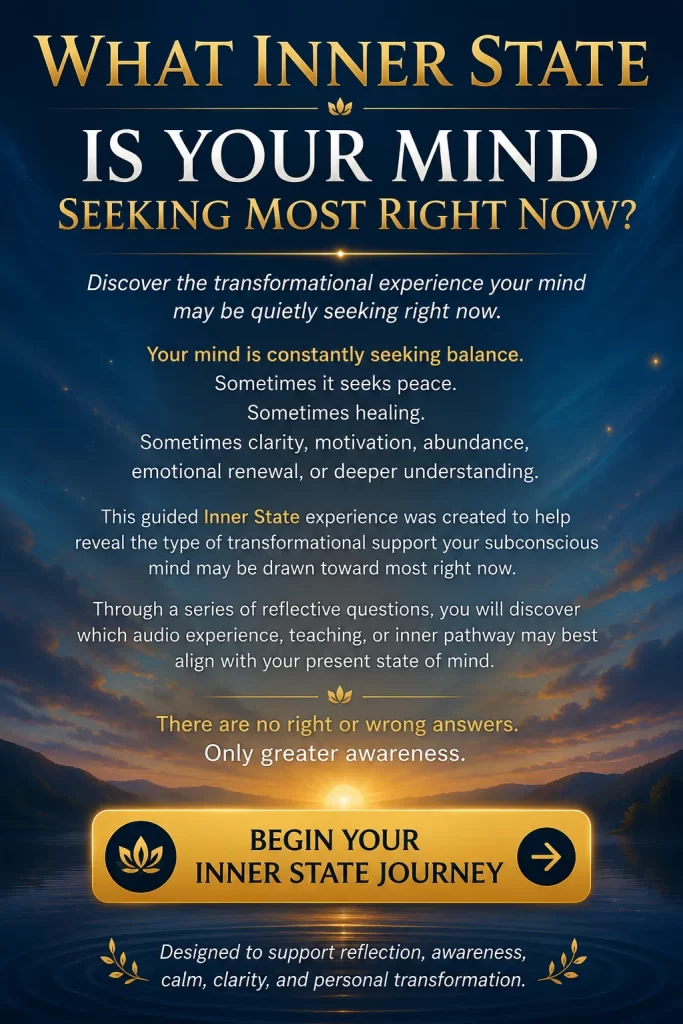
Discover the transformational experience your mind may be quietly seeking right now.
Your mind is constantly seeking balance.
Sometimes it seeks peace.
Sometimes healing.
Sometimes clarity, motivation, abundance, emotional renewal, or deeper understanding.
This guided Inner State experience was created to help reveal the type of transformational support your subconscious mind may be drawn toward most right now.
Through a series of reflective questions, you will discover which audio experience, teaching, or inner pathway may best align with your present state of mind.
There are no right or wrong answers.
Only greater awareness.

Become a Breath of God Partner
We’re looking for people who want to help us share the Breath of God library with their audience — and earn 35% recurring commission from every $12/week member they introduce.
If you believe Breath of God could be something genuinely valuable to the people you reach, we’d love you to discover the opportunity.
One simple subscription. Every audiobook, every eBook, every program.
© 2023 The Human Factor Consultancy
Web Design and Development by UPQODE