
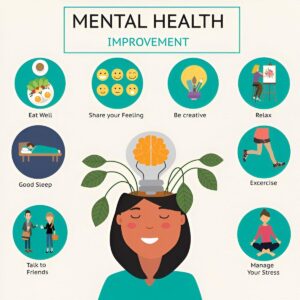
Mental health is equally vital as physical health, shaping our thoughts, emotions, and actions. When our mental health is in good shape, we are better able to handle stress, build relationships, work productively, and enjoy life. Just like our physical health, mental well-being requires consistent care and attention.
You don’t need to make big changes overnight. Small, consistent actions every day can have a big impact over time. This article will explore practical and simple ways to improve your mental health daily—with real facts and helpful tips that you can start using today.
What Is Mental Health?
Mental well-being covers our emotions, thoughts, and social interactions. It affects how we think, handle stress, make choices, and relate to others. Good mental health doesn’t mean being happy all the time; it means being able to manage life’s ups and downs effectively.
Why Daily Mental Health Care Matters?
Mental health influences our thoughts, emotions, and behaviors. It affects how we cope with stress, interact with others, and make decisions. According to the World Health Organization (WHO), one in every eight people globally lives with a mental health disorder, such as anxiety or depression.
Good mental health is not just about the absence of illness. It’s about feeling good in your everyday life—having a sense of purpose, strong relationships, and the ability to cope with life’s ups and downs.
Daily Habits for Mental Health Improvement
Let’s explore practical steps you can take each day to boost your mental wellness.
1. Start Your Day with a Positive Routine
The way you kick off your morning determines your day’s overall tone. A positive morning routine can help reduce stress and give you a sense of control.
Try this:
● Wake up 15 minutes earlier to avoid rushing.
● Do light stretching or deep breathing.
● Say one positive affirmation (e.g., “Today, I choose calm and peace.”)
● Avoid checking your phone immediately after waking up.
Fact: Studies show that people who practice gratitude and mindfulness in the morning are less likely to experience anxiety during the day.
2. Get Regular Exercise
Exercise is not just good for your body—it’s a powerful medicine for your mind. Physical activity releases endorphins, uplifting your mood and increasing energy levels.
Easy ways to get moving:
● Take a 20-minute walk outside.
● Dance to your favorite music.
● Join a yoga or fitness class online.
● Try gentle workouts like tai chi or swimming.
Fact: According to the Anxiety and Depression Association of America, even just 10 minutes of exercise can boost your mood and reduce stress.
3. Eat for Mental Wellness
What you eat can influence how you feel. A healthy diet supports brain function and emotional stability.
Include these foods in your daily diet:
● Leafy greens (like spinach and kale)
● Fatty fish (like salmon, full of omega-3)
● Berries (rich in antioxidants)
● Nuts and seeds
● Whole grains
Avoid too much sugar, caffeine, or highly processed foods—they can lead to mood swings and fatigue.
Fact: A study published in the journal Psychiatry Research found that a Mediterranean-style diet can significantly reduce the risk of depression.
4. Practice Mindfulness or Meditation
Mindfulness involves staying present and aware without passing judgment. Meditation is one way to practice it. It helps calm the mind and reduce overthinking.
Start small:
● Close your eyes and take 5 deep breaths.
● Focus on your breath for 3–5 minutes.
● Use free apps like Insight Timer or Calm for guided meditation.
Fact: Research from Harvard Medical School found that mindfulness meditation can reduce anxiety, improve sleep, and even change brain structure in areas related to stress.
5. Connect with Others
Human connection is essential to mental well-being. Talking to someone—even for a few minutes—can lift your mood and reduce feelings of loneliness.
Ways to connect daily:
● Call or text a friend or family member.
● Join a group or community (online or offline).
● Smile or say hello to a neighbor.
● Volunteer or help someone in need.
Fact: A study from the American Psychological Association shows that people with strong social connections have lower levels of depression and anxiety.
6. Get Enough Sleep
Sleep and mental health go hand in hand. Lack of sleep can make it harder to manage emotions and think clearly.
Sleep tips:
● Stick to a consistent bedtime.
● Avoid screens an hour before bed.
● Create a calming bedtime routine.
● Keep your room cool and dark.
Fact: Adults need 7 to 9 hours of quality sleep per night. Poor sleep is linked to higher risks of anxiety and depression.
7. Limit Screen Time and Social Media
While technology connects us, too much screen time—especially scrolling through social media—can increase feelings of stress, loneliness, and low self-esteem.
What to do instead:
● Set a timer for app use.
● Take regular breaks from screens.
● Use social media to inspire, not compare.
● Replace scrolling with reading, journaling, or going outside.
Fact: Studies show that spending more than 3 hours per day on social media is associated with increased anxiety and depression in both teens and adults.
8. Write It Down
Writing about how you feel allows you to process and comprehend your emotions more effectively. Journaling also helps you notice patterns and let go of negative emotions.
How to start journaling:
● Write down 3 things you’re grateful for.
● Describe your mood and what caused it.
● Write a letter to your future self.
● Reflect on what went well in your day.
Fact: According to the University of Rochester Medical Center, journaling helps reduce stress and improves emotional clarity.
9. Do Something You Enjoy Every Day
Make time each day for something that brings you joy—whether it’s painting, playing music, baking, gardening, or reading. Enjoyment boosts your mood and helps you recharge.
Try:
● Watching a funny video
● Playing with a pet
● Listening to uplifting music
● Doing a small creative project
Fact: Engaging in hobbies can reduce stress levels by up to 75%, according to a study in the Annals of Behavioral Medicine.
When to Seek Professional Help
While daily practices can greatly help, sometimes professional support is necessary.
Don’t hesitate to reach out if you:
● Feel overwhelmed most days
● Experience panic attacks or deep sadness
● Have trouble functioning at work or home
● Feel disconnected or hopeless
Therapists, counselors, and support groups are valuable resources for mental health improvement. Seeking help shows courage and strength, not weakness.
Extra Tips for Daily Mental Wellness
Here are more quick actions you can take to boost your mental well-being daily:
● Breathe deeply for one minute when you feel overwhelmed.
● Drink enough water. Dehydration can affect mood and focus.
● Celebrate small wins—whether it’s getting out of bed or completing a task.
● Unplug and go outside for fresh air and sunlight.
● Forgive yourself—progress takes time.
When Life Gets Busy: Quick 5-Minute Practices
Even on hectic days, you can still do something to take care of your mental health. Here are a few fast practices:
● Stretch your body for 5 minutes.
● Take a short walk outside and notice nature.
● Close your eyes and listen to calming music.
● Text someone a compliment or thank you note.
● Reflect on what you’re proud of today.
Small steps really do add up.
Warning Signs to Watch For
If you’re struggling, it’s important to recognize the signs and seek support. Common signs of poor mental health include:
● Constant fatigue or low energy
● Feeling sad, hopeless, or overwhelmed
● Withdrawal from family and friends
● Changes in sleep or appetite
● Trouble concentrating
● Thoughts of self-harm or suicide
If you notice these signs in yourself or someone else, reach out to a mental health professional or helpline.
Conclusion: Be Kind to Yourself
Mental health improvement is a journey, not a destination. Every step you take—no matter how small—has the power to make a big difference in your life. By paying attention to your needs, practicing self-care, and staying connected, you can build a stronger, calmer, and happier mind. Remember, you don’t need to fix everything overnight. Start with one habit, one breath, or one kind thought today. Your mental well-being is worth it.
So start today. Choose one or two tips from this list and build from there. Your future self will thank you. Better still give my medical soundtrack Breath of God a go by reading all about its remarkable ability to gift the human brain the sound it needs to cure any mental illness. As it is a sickness affecting neurological cells.